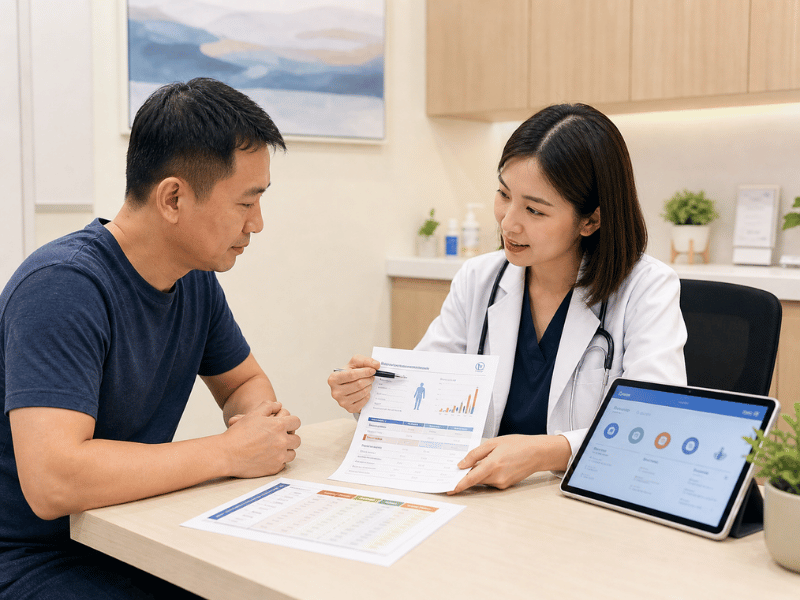
Booking a full body checkup is a smart move. But many people unknowingly reduce its accuracy before they even arrive. Small preparation errors can skew results, trigger false alarms, or lead to repeat tests. Here is what to avoid — and what to do instead.
Key Takeaways
- Small preparation mistakes can distort test results and lead to misdiagnosis
- Fasting, hydration, and medication timing directly affect accuracy
- Lifestyle factors like sleep, stress, and exercise also play a role
- A full body checkup is only as reliable as the preparation behind it
- Following clinic instructions ensures faster, more accurate results
Why Preparation Matters for a Full Body Checkup
Screening tests measure specific markers in your blood, urine, and vitals. These numbers shift based on what you eat, drink, or do in the hours before testing. [1] Even minor changes can push a reading into an abnormal range — or mask a real problem. Proper preparation protects your results and your time.
Common Mistakes That Can Affect Your Results
Not Fasting Properly (or Fasting When Not Required)
Most blood tests require 8 to 12 hours of fasting. [2] Eating beforehand can raise your glucose and cholesterol readings. Even a small snack or a black coffee counts. On the other hand, some tests do not require fasting at all — starving yourself unnecessarily causes stress with no benefit. Always confirm with your clinic.
Drinking the Wrong Things Before Your Test
Plain water is the only safe option during a fasting window. Coffee, tea, juice, and flavoured drinks — even without sugar — can stimulate digestion and alter blood markers. [3] If you are unsure whether a drink is allowed, skip it and stick to water.
Taking Supplements or Medications Incorrectly
Biotin, found in many beauty supplements, is known to interfere with thyroid and hormone test results. [4] Other supplements can affect liver enzymes or vitamin levels. Do not stop prescribed medication without your doctor’s advice. Instead, bring a full list of everything you take to your appointment.
Exercising Before Your Appointment
A hard workout raises your creatine kinase, glucose, and even cholesterol temporarily. [5] These changes can make normal results look abnormal. Avoid strenuous activity for at least 24 hours before your checkup. Light walking is fine.
Not Drinking Enough Water
Dehydration thickens the blood, which can affect readings. It also makes veins harder to locate, turning a simple blood draw into a difficult one. Drink enough plain water the night before and the morning of your test.
Drinking Alcohol or Smoking Before the Test
Alcohol affects liver enzyme levels and can raise triglycerides. [6] Smoking alters blood oxygen levels and other markers. Avoid both for at least 24 hours before your screening.
Going for a Checkup While Sick
A fever or active infection raises your white blood cell count and inflammation markers. This can trigger unnecessary follow-ups or mask the results you actually need. If you are unwell on the day, reschedule.
Poor Sleep and High Stress Levels
Sleep deprivation and stress can elevate cortisol and blood pressure readings. These effects are temporary, but they can still influence your results. A well-rested, calm morning makes a real difference.
Not Following Timing Instructions
Certain hormone tests must be done at specific times of day to be accurate. Morning appointments are generally better for fasting-based tests. Check your clinic’s instructions carefully and book accordingly.
Arriving Unprepared or Without Key Information
Forgetting your medication list, existing conditions, or current symptoms limits what your doctor can do with your results. Come prepared. Write things down if needed.
What You Should Do Instead
Follow your clinic’s specific preparation guide. Fast only if required. Drink plain water, sleep well, and avoid alcohol, smoking, and heavy exercise beforehand. Bring your medication list and any questions. For fasting tests, schedule a morning slot so the wait feels shorter.
When to Reschedule Your Full Body Checkup
Reschedule if you are sick, if you forgot to fast, or if you took a supplement your clinic advised against. Accuracy matters more than keeping a date. A rescheduled test gives you results worth acting on.
Frequently Asked Questions
Can I drink water before a full body checkup?
Yes. Plain water is encouraged. It keeps you hydrated and makes blood draws easier.
What happens if I accidentally eat before fasting tests?
Your results may be inaccurate. Inform your clinic when you arrive — you may need to reschedule.
Should I stop my medication before a checkup?
Only if your doctor specifically advises it. Never stop medication on your own.
Can I exercise before my checkup?
Avoid strenuous exercise for at least 24 hours before testing. It can temporarily alter several blood markers.
Conclusion
A full body checkup is only as useful as the results it produces. Getting those results right starts well before you walk through the clinic door. Follow the preparation steps, avoid the common mistakes, and get answers you can actually trust — the first time.
References
[1] Lab test results can be influenced by fasting status, medication timing, hydration, and recent physical activity. https://www.healthhub.sg/live-healthy/know-your-health-screening-tests
[2] Most fasting blood tests in Singapore require patients to abstain from food and drinks (except water) for 8 to 12 hours before the test. https://www.healthhub.sg/live-healthy/know-your-health-screening-tests
[3] Beverages such as coffee, tea, and juice can stimulate digestion and alter certain blood markers even when consumed without added sugar. https://www.hpb.gov.sg/healthyliving/health-diseases-and-conditions/diabetes/blood-glucose-test
[4] High doses of biotin have been shown to interfere with thyroid function and hormone-related lab test results. https://www.moh.gov.sg/hpp/doctors/guidelines-resources
[5] Strenuous physical activity can temporarily raise creatine kinase, glucose, and cholesterol levels in blood test results. https://www.healthhub.sg/live-healthy/know-your-health-screening-tests
[6] Alcohol consumption can elevate liver enzyme readings and raise triglyceride levels, affecting screening accuracy. https://www.moh.gov.sg/diseases-updates/health-advisory