New parents today juggle many messages about vaccines. Family advice, chat groups and social media can all clash. It is normal to feel torn between fear and duty. Yet your baby still needs strong protection against serious infections.
In Singapore, baby vaccination follows the National Childhood Immunisation Schedule. This plan gives protection against diseases like measles, whooping cough and meningitis. For Singaporean children, these vaccines are fully subsidised at CHAS GP clinics and polyclinics. Love and Joy Family Clinic in Clementi is one such clinic that supports families through this journey.
Key Takeaways
- Baby vaccination helps protect children from serious infections like measles, whooping cough, meningitis and polio.
- Many vaccine-preventable diseases are rare today because vaccination rates remain high.
- Large studies have found no proven link between vaccines and autism.
- Delaying or skipping vaccines can leave babies exposed during their most fragile months.
- Mild fever, fussiness and soreness after vaccination are common and usually settle within one or two
Why baby vaccination still matters in Singapore
Many parents think old childhood diseases no longer exist. In truth, they are mainly kept away by high vaccination rates. When fewer children receive vaccines, infections can spread again, especially in crowded cities. Babies who are too young or unvaccinated face the highest risk of serious illness.
Vaccines work by teaching your baby’s immune system to recognise germs. The vaccines used in Singapore are approved after strong safety checks. They protect against a clear list of infections that can cause lung disease, brain injury, hearing loss or death. Baby vaccination lowers these risks in the early years, when a child is most fragile.
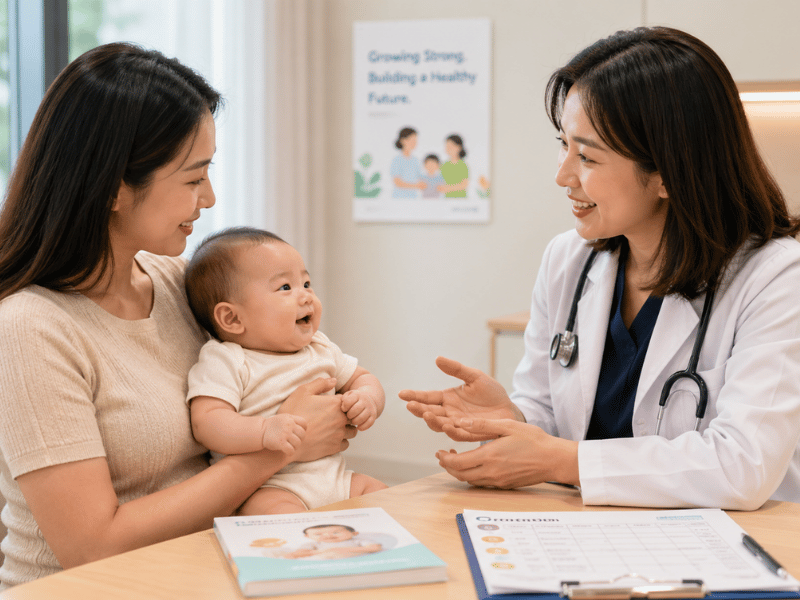
At Love and Joy Family Clinic, childhood vaccinations follow the national schedule. All routine vaccines up to the age of five are fully subsidised for Singapore citizen children. During each visit, the doctor also checks growth, development and your baby’s health booklet. This paired approach gives both infection protection and peace of mind.
Common myths about baby vaccination
Myth 1: These diseases are gone so my baby does not need vaccines
Some parents look around and rarely see measles or polio. They then feel that vaccines are no longer needed. In reality, these germs still circulate in other places and can be brought into Singapore. When a disease enters a group of unvaccinated children, it can spread very quickly.
Baby vaccination keeps these infections from gaining a foothold. When most children are protected, outbreaks remain small or are stopped early. If many families delay or skip vaccines, this barrier weakens. Your child then becomes part of a much larger risk pool.
Myth 2: Vaccines cause autism or brain damage
This myth started from one small study that has since been discredited. Large studies in many countries have looked at this claim and found no link. The timing of autism signs often overlaps with the vaccination schedule, which can make parents worry. But the current evidence points to brain development factors, not vaccines, as the cause.
Regulators and health experts continue to watch vaccine safety data closely. When rare side effects appear, they are studied and managed. Autism is not on this list of proven risks. You can raise these worries with your doctor and go through the evidence together.
Myth 3: Too many vaccines will overload my baby’s immune system
A baby meets many new germs every day through air, food and touch. The immune system handles these exposures without trouble. The number of antigens in modern vaccines is small compared with daily life. Baby vaccination adds a few controlled targets so the body can prepare for future attacks.
The schedule your child follows is designed by experts who study both timing and safety. Combination vaccines reduce the number of injections, while still giving strong protection. Studies show that babies who receive several vaccines at one visit do not have weaker immune systems. In fact, they gain faster and broader protection.
Myth 4: It is safer to delay or skip some vaccines
Spacing vaccines out can feel gentler, but it leaves bigger gaps in protection. The early months and years are when infections hit hardest. When parents delay baby vaccination, their children stay exposed to diseases that can cause pneumonia, brain swelling or hospital stays. The risk lies in the delay, not the schedule.
The national schedule places each vaccine at an age where the baby can respond well. Health authorities review this plan often and update it as new data appears. There are special cases where timing may change, such as serious illness or immune problems. For most children, following the standard schedule remains the safer path.
Myth 5: Common side effects mean the vaccine is unsafe
Mild fever, fussiness and a sore arm can worry new parents. These short term reactions are usually a sign that the immune system is working. Most settle within one or two days with simple care at home. They are far less dangerous than the diseases the vaccines prevent.
Serious reactions to vaccines are very rare. In Singapore, clinics and hospitals report such events to national systems for close review. This constant tracking helps keep baby vaccination safe for the whole community. If you are unsure what is normal, your family doctor can explain which signs need urgent care.
How Love and Joy supports new parents
Love and Joy Family Clinic provides childhood vaccination and developmental screening in one visit. The doctor takes measurements, checks milestones and records everything in your child’s health booklet. This helps parents track both infection protection and developmental progress over time. It also gives space to ask about feeding, sleep and behaviour at each stage.
Visits for babies and young children are by appointment, which helps reduce waiting time. The clinic plans ahead for each visit and prepares a calm room for your child. If you think a dose was missed, Love and Joy can review records and offer a safe catch up plan. This guidance can be reassuring when schedules feel confusing.
Frequently Asked Question
Is it safe for my baby to receive several vaccines in one visit?
Yes, healthy babies can receive several vaccines in one visit without harm. Their immune systems handle far more daily exposure from normal life.
What should I do if my baby gets a fever after vaccination?
Keep your baby comfortable, give fluids and dress them lightly. If the fever is high or lasts more than two days, see a doctor.
Can my baby still get sick even after baby vaccination?
Yes, infection is still possible, but the risk is lower. Vaccinated babies who do fall sick usually have milder illness and fewer problems.
Who should I speak to if I am unsure about the vaccine schedule?
Your first stop should be your regular family doctor or clinic. At Love and Joy Family Clinic, the team can walk you through the schedule and answer your questions.
Take the next step
If you feel unsure after hearing many different views, speak to a trusted doctor before deciding. Baby vaccination is a key part of keeping your child safe in the early years. For parents in Clementi and nearby areas, Love and Joy Family Clinic can review your child’s records, correct any missed doses and plan the next visits. Book an appointment with Love and Joy today to talk through your concerns and keep your baby on track.
References
- Vaccine.gov.sg. (n.d.). Children. https://vaccine.gov.sg/children
- World Health Organization. (2025, July 15). Immunization coverage. https://www.who.int/news-room/fact-sheets/detail/immunization-coverage
- World Health Organization. (2025, December 11). WHO expert group’s new analysis reaffirms there is no link between vaccines and autism. https://www.who.int/news/item/11-12-2025-who-expert-group-s-new-analysis-reaffirms-there-is-no-link-between-vaccines-and-autism
- Children’s Hospital of Philadelphia. (n.d.). Immune system and vaccines. https://www.chop.edu/vaccine-education-center/human-immune-system/immune-system-and-vaccines
- Health Sciences Authority. (2020, December 8). Reporting vaccine adverse events. https://www.hsa.gov.sg/announcements/safety-alert/reporting-vaccine-adverse-events