In today’s fast-paced world, it’s easy to overlook our health until something goes wrong. This is where a full body checkup comes in—not just as a routine procedure, but as a proactive approach to ensuring your health remains on track. A comprehensive checkup helps identify potential health issues before they escalate into serious problems.1 With regular screenings, you can take charge of your health and make informed decisions about your well-being.
What is a Full Body Checkup?
A full body checkup encompasses a range of medical tests designed to assess your overall health. It evaluates important indicators like blood pressure, cholesterol levels, and organ function, providing a clear picture of your health status.2 Typically, these checkups include laboratory tests, physical examinations, and health assessments that screen for diseases such as diabetes, heart conditions, and more.
Understanding the Importance of Preventive Health
Preventive health is all about taking steps to avoid illness before it occurs. By participating in a full body checkup, you invest in your health and take proactive measures. Early detection of health conditions can lead to more effective treatment options, reduce healthcare costs, and enhance your quality of life. Knowing your health status empowers you to make lifestyle changes that can mitigate risks and promote longevity.
Key Tests Included in a Full Body Checkup
While the specific tests may vary, most full body checkups include:
- Blood Tests: Analyze cholesterol levels, blood sugar levels, and other markers.
- Urinalysis: Checks for kidney function and other metabolic conditions.
- Physical Examination: A general assessment to identify concerns.
- Cancer Screenings: Depending on age and risk factors, tests like mammograms or colonoscopies may be included.3
By understanding what these tests involve, you can prepare yourself for a thorough assessment of your health.
Why Regular Full Body Checkups Matter
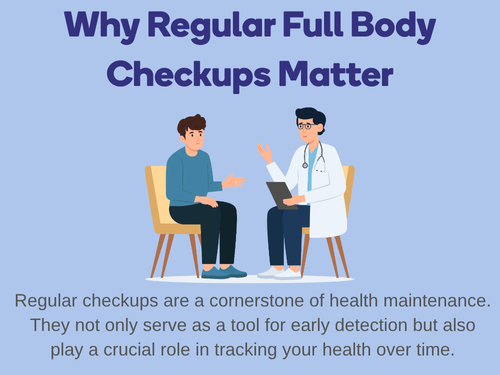
Regular checkups are a cornerstone of health maintenance. They not only serve as a tool for early detection but also play a crucial role in tracking your health over time.
Catching Health Issues Early
Many serious health conditions develop without noticeable symptoms. A full body checkup can catch these silent issues early, which is essential for effective treatment. For example, elevated cholesterol levels can lead to heart disease if not addressed, and diabetes can progress without warning.4 Regular checkups provide an opportunity to address such problems before they escalate.
The Role of Health Screenings in Longevity
Studies consistently show that proactive health screenings can lead to a longer, healthier life. By identifying risk factors, patients can make lifestyle changes and, when necessary, pursue medical interventions. This not only prolongs life but also improves the quality of life. In short, the right screenings can make a significant difference in how you live and enjoy your years.
How to Prepare for Your Full Body Checkup
Preparation can significantly impact the effectiveness of your checkup. Knowing what to expect helps alleviate any concerns.
What to Expect During the Appointment
When you attend your full body checkup, expect a combination of discussions and tests. Your healthcare provider will likely begin with a physical exam and then guide you through various tests. This may include drawing blood, taking vital signs, and conducting any necessary screenings. Don’t be afraid to ask questions or express concerns during this process.
Essential Questions to Ask Your Doctor
Before leaving the appointment, consider asking your doctor the following:
- What are the key findings from my tests?
- Are there any immediate health changes I need to make?
- What screenings should I undergo in the future?
- Are there lifestyle changes you would recommend?
These questions help ensure that you grasp the full picture of your health and take the right steps moving forward.
What Happens After the Checkup?
Once the checkup is complete, the real work begins: understanding your results and acting on them.
Interpreting Your Results
After your tests, your healthcare provider will interpret the results and explain their implications. They will discuss any areas of concern and what those mean for your health. It’s crucial to be engaged in this conversation. Take notes or ask for clarifications if necessary.
Next Steps for Your Health
Depending on your results, you may need to make lifestyle changes, schedule follow-up appointments, or consider further testing. A proactive approach will set you on a path to better health.
Book Your Full Body Checkup Today!
Taking charge of your health starts with the decision to prioritize regular checkups. A full body checkup at Love & Joy Family Clinic offers you the opportunity to monitor your health effectively, ensuring that you detect any potential issues early.
Take Charge of Your Health
Your health is your most valuable asset. Prioritize it with a full body checkup that delivers peace of mind and helps you to prevent severe illnesses. It’s not just about avoiding sickness; it’s about living your best life.
Convenient Options at Love & Joy Family Clinic
At Love & Joy Family Clinic, you can easily book your full body checkup today. Our dedicated team is here to support your journey toward optimal health. Don’t wait for a sign—act now!
Make your health a priority and take the first step toward a healthier future. Book your appointment today!